7 Truths About Amlodipine Water Retention Your Doctor Isn't Telling You

Author
By Anne P. - Former Hypertension Patient & Health Advocate
Today

Your church shoes don't fit, your clothes don't fit, you don't recognize yourself in the mirror—and your doctor's only solution is compression socks that don't actually work.

Recent research reveals exactly why Amlodipine causes this specific type of swelling—and what actually stops it.

Reason #1: Your Doctor Didn't Explain This Part

Reason #1: Your Doctor Didn't Explain This Part

Here's what your doctor didn't tell you: Amlodipine doesn't just lower your blood pressure. It artificially blocks one of your body's natural regulation systems (calcium channels).

When you force your blood vessels to relax this way, something happens at the capillary level throughout your entire body. These tiny blood vessels start leaking fluid into surrounding tissue. Your ankles swell. Your legs ache. You gain 15+ pounds in weeks.

That swelling you see? It's not normal water retention. It's your body saying this isn't the right solution.

The good news: When you support your body's natural blood pressure regulation across all three pathways instead of blocking one, the leaking stops. Fluid stays where it belongs. Your ankles return to normal—often within the first three to four weeks.

Reason #2: Your Swelling Isn't Water Weight

Reason #2: Your Swelling Isn't Water Weight

Remember when your ankles fit in your shoes? Here's why they don't anymore:

When Amlodipine blocks calcium channels, it doesn't just relax arteries—it affects the tiny blood vessels (capillaries) throughout your body. These vessels start leaking fluid into surrounding tissue. Your ankles swell. Your legs ache. You gain 15+ pounds of water weight.

Compression socks don't help because they're not addressing the real problem: your body needs balanced support across all three blood pressure regulation pathways, not one artificially blocked channel creating chaos everywhere else.

When all three pathways work together naturally, fluid stays where it belongs. Swelling resolves. Your shoes fit again.

Reason #3: Your Body Needs Three Pathways

Reason #3: Your Body Needs Three Pathways

Researchers at Zhongnan Hospital of Wuhan University recently discovered your body uses three separate biological pathways to regulate blood pressure naturally:

  1. Arterial Flexibility - Your vessels need to expand and contract properly
  2. Nitric Oxide Production - Natural signals that relax vessels AND produce cellular energy
  3. Vascular Inflammation Control - Addresses why vessels constricted in the first place

A 2025 study published in Frontiers in Pharmacology by the Wuhan University research team confirmed that when nitric oxide production is suppressed, blood pressure rises significantly—and restoring this pathway alone can reduce blood pressure and improve vascular function.

Amlodipine artificially blocks just ONE (calcium channels). It forces compliance but ignores the other two. That's why you get side effects—your body is desperately trying to compensate for an incomplete solution.

When all three pathways are supported naturally with nutrients like cayenne, your body can restore blood pressure the way it was designed to—without exhaustion, swelling, or anxiety.

Sources are listed below

Reason #4: Single Ingredients Miss Two Pathways

Reason #4: Single Ingredients Miss Two Pathways

You probably already tried cayenne. Maybe hawthorn. Maybe beetroot powder. And they... sort of helped? But not enough?

Here's why: Single ingredients typically only support ONE of the three pathways. Cayenne boosts nitric oxide (pathway 2). Hawthorn helps arterial flexibility (pathway 1). But if you're only supporting one pathway, your results stay inconsistent.

Your body needs all three pathways working in sync—like a three-legged stool. Remove one leg and the whole thing collapses.

That's why people who support all three pathways together see results in 2-4 weeks that they never achieved with single supplements, no matter how "potent" the dose.

Reason #5: All Three Pathways Working Together

Reason #5: All Three Pathways Working Together

Here's something most people don't realize: When you take pills or capsules, different ingredients absorb at different rates. Cayenne might peak at hour 2. Hawthorn at hour 4. Turmeric at hour 6.

So your three pathways never actually work together—they're taking turns, which is why results feel hit-or-miss.

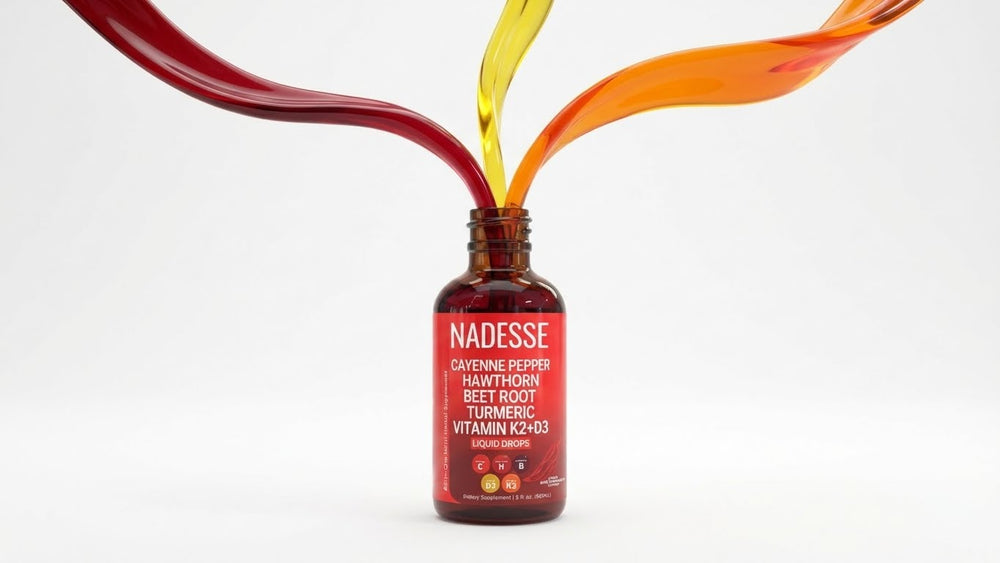
Liquid delivery changes this: all eight synergistic ingredients (hawthorn, cayenne, beet root, D3/K2, cinnamon, turmeric, ginseng, berberine) hit your bloodstream within the same 30-60 minute window.

All three pathways activate together. Your body finally gets the complete support it's been missing. That's when people report: "Wait, I actually feel good again."

Reason #7: Join 2,800+ People Who Avoided Nightmare Side Effects

Reason #7: Join 2,800+ People Who Avoided Nightmare Side Effects

Linda M., 58 - "I got my energy back in 11 days. ELEVEN DAYS. After 4 months of feeling like a zombie on Amlodipine, I can play with my grandkids again. My BP is 128/82 and I'm not constantly exhausted."

Susan T., 54 - "The swelling is GONE. My ankles look normal again. I cried when I put on my regular shoes. And my brain fog cleared—I can actually think straight at work."

Jennifer P., 61 - "My doctor couldn't believe my numbers dropped to 132/79 naturally. She said 'whatever you're doing, keep doing it.' I have my life back."

Reason #6: Zero Risk With Our 90-Day Guarantee

Reason #6: Zero Risk With Our 90-Day Guarantee

Here's the thing: You've been suffering for months. Your doctor says "give it more time" or suggests adding another medication to counter the side effects.

You deserve to feel good again—energized, clear-headed, free from swelling and anxiety.

That's why we offer a 90-day money-back guarantee. Try supporting all three pathways naturally for two months. If you don't see your blood pressure normalize AND your energy return, get your money back. No questions.

Plus, first-time customers: Buy One, Get One Free. Give one to yourself and one to someone you love who's struggling with medication side effects.

You don't have to choose between high blood pressure and a life you can't enjoy.

Your body already knows how to regulate blood pressure naturally—it just needs support across all three pathways instead of one artificially blocked channel creating chaos.

Offer
LIMITED TIME OFFER

BUY ONE, GET ONE FREE

Sale for first time customers only.
00 : 00 : 00
Check Availability

SOURCES:

Nitric Oxide & Blood Pressure Regulation:

Li, C., Gao, L., Ling, Y., & Lv, Z. (2025). O-GlcNAcylation of eNOS in high-salt-induced thoracic aorta endothelial dysfunction in mice. Frontiers in Pharmacology, 16, 1730447. Zhongnan Hospital of Wuhan University.
https://doi.org/10.3389/fphar.2025.1730447

Oh, E. Y., Byeon, S., Choi, S. K., & Lee, Y. H. (2025). Neutralizing endocan reduces blood pressure and improves endothelial function in angiotensin II-induced hypertensive mice. Biomedicine & Pharmacotherapy, 194, 118910. Yonsei University College of Medicine.
https://doi.org/10.1016/j.biopha.2025.118910

Arterial Stiffness & Vascular Compliance:

Joseph, J., Raj, K. V., Nabeel, P. M., & Chandran, D. S. (2025). An image-free ultrasound-based approach for combined assessment of local and regional arterial stiffness in humans. Journal of Visualized Experiments, (226). Indian Institute of Technology Madras.
https://doi.org/10.3791/69002

Mandak, S. J., Martinez, X., Rusnak, M., et al. (2026). Vascular stiffness relates to the blood pressure response to stair climbing in young adults. Blood Pressure Monitoring. California State University San Marcos.
https://doi.org/10.1097/MBP.0000000000000791

Vascular Inflammation & Endothelial Dysfunction:

Yu, J., Qian, H., Wang, M., et al. (2025). Fluoride and cardiovascular diseases: Epidemiologic investigations and mechanistic insights. Biological Trace Element Research. Jiaxing University College of Medicine & First Hospital of Jilin University.
https://doi.org/10.1007/s12011-025-04960-z

Santacruz, J. C., Mantilla, M. J., Pulido, S., et al. (2025). Pulmonary hypertension in systemic lupus erythematosus: Current evidence and future directions. Cureus, 17(11), e97863.
https://doi.org/10.7759/cureus.97863

Comprehensive Blood Pressure Management:

Harahap, U., Syahputra, R. A., Ahmed, A., et al. (2024). Current insights and future perspectives of flavonoids: A promising antihypertensive approach. Phytotherapy Research, 38(6), 3146-3168. Universitas Sumatera Utara.
https://doi.org/10.1002/ptr.8199

Results vary.

© 2025 Nadesse.